


A Phase II Environmental Site Assessment (ESA) is performed when there is a need to investigate potential environmental contamination on a property. These investigations are commonly recommended following findings from a Phase I ESA, redevelopment planning activities, regulatory concerns, or historical site use indicating the possibility of contamination.
Unlike a Phase I ESA, which primarily involves records review and site observations, a Phase II ESA includes field investigation activities such as soil, groundwater, or vapor sampling to determine whether contamination is present and evaluate potential environmental risks.
Phase II ESAs are commonly used during commercial property transactions, industrial redevelopment projects, brownfield planning efforts, and environmental due diligence investigations throughout Minnesota and the Midwest.
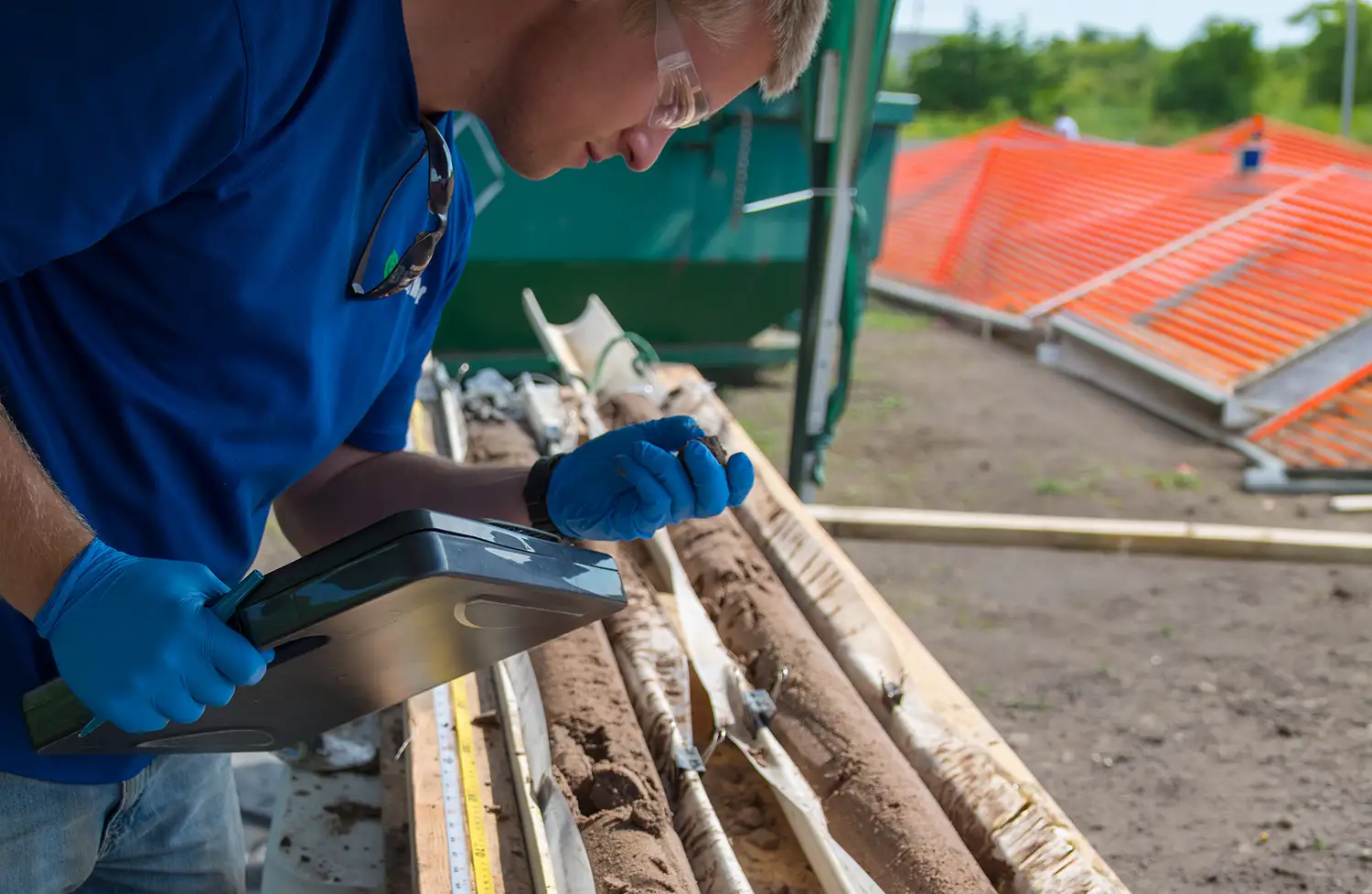
Field technician examines a soil sample collected during an environmental investigation to evaluate soil conditions.
A Phase II ESA is typically conducted when environmental concerns are identified during a Phase I ESA or when site conditions indicate the potential presence of contamination.
Common triggers include:
Phase II investigations help property owners, developers, municipalities, and businesses better understand environmental conditions before moving forward with redevelopment, construction, property transactions, or remediation planning.
In Minnesota, Phase II ESAs are often associated with brownfield redevelopment projects and properties participating in Minnesota Pollution Control Agency (MPCA) programs.
The scope of a Phase II ESA depends on site history, potential contaminants, and project objectives. Investigations are designed to gather environmental data that helps determine whether contamination is present and whether additional action may be required.
Before field activities begin, environmental professionals review available site information and develop an investigation strategy tailored to the property.
This planning process may include:
A properly designed investigation helps ensure representative environmental data is collected efficiently and safely.
Soil investigation is often one of the primary components of a Phase II ESA.
Environmental teams may use drilling equipment or direct-push technology to collect soil samples from targeted areas across the site. Samples are then submitted to certified laboratories for analysis.
Common evaluation areas include:
The results help determine the extent and severity of contamination, if present.

Field technician collects and handles soil samples as part of a Phase II environmental site assessment.
If contamination has the potential to impact groundwater, monitoring wells may be installed to evaluate subsurface conditions.
Groundwater investigations help determine:
In some cases, environmental investigations also evaluate vapor intrusion risks. Vapor intrusion occurs when volatile chemicals migrate from contaminated soil or groundwater into buildings.
Additional assessment activities may include:
These investigations help protect building occupants and support safe redevelopment planning.
The contaminants evaluated during a Phase II ESA vary depending on the property’s operational history and surrounding land use.
Common contaminants investigated in Minnesota include:
Environmental professionals evaluate site conditions, historical records, and regulatory guidance to determine appropriate analytical testing parameters.
Once fieldwork and laboratory analysis are complete, environmental professionals interpret the data and prepare findings documentation.
This process may include:
Depending on the findings, next steps could involve remediation planning, long-term monitoring, redevelopment coordination, or closure activities. In many cases, organizations benefit from working with a single environmental partner capable of supporting both investigation and remediation efforts throughout the project lifecycle.
Bay West can continue supporting projects beyond the investigation phase, helping clients move efficiently from site characterization to corrective action when necessary.
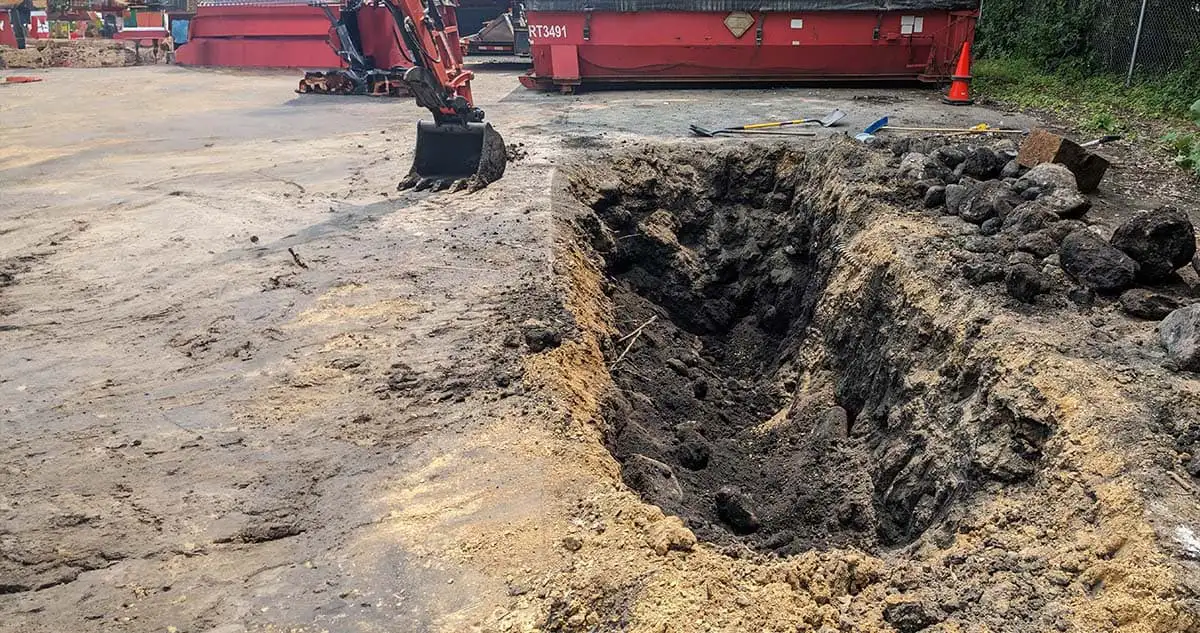
Excavation work being performed at a contaminated site as part of environmental investigation and remediation activities.
Environmental investigations in Minnesota and the Upper Midwest require an understanding of regional geology, seasonal conditions, historical land use, and state-specific regulatory requirements. These factors can influence investigation strategies, project timelines, and how environmental concerns are addressed.
Experience working with Minnesota regulatory agencies and programs, including the Minnesota Pollution Control Agency (MPCA), helps Bay West provide practical guidance for redevelopment projects, contaminated properties, and other environmental investigations.
Bay West provides Phase II Environmental Site Assessment services for municipalities, developers, industrial facilities, commercial property owners, and redevelopment projects across Minnesota and the Midwest.
Our environmental professionals support projects through:
From Phase I and Phase II Environmental Site Assessments through remediation planning, environmental cleanup, and industrial services, our team can help clients move from assessment to action with a single experienced environmental partner.
Whether supporting redevelopment planning, environmental due diligence, or contamination investigations, Bay West provides practical environmental planning services tailored to project goals and regulatory requirements.
Our team can assist with every stage of the process, from initial site assessments and environmental investigations through remediation planning and project implementation.
If you are evaluating a property, planning redevelopment, or investigating potential contamination concerns, contact Bay West to discuss your project and learn how our environmental planning team can help.