

What to Do After a Spill in Minnesota (Step-by-Step Response Guide)

Immediate Actions to Take After a Spill in Minnesota

When a spill occurs, the actions taken in the first few minutes can significantly affect safety, environmental impact, and regulatory outcomes. Whether the release involves fuel, chemicals, or industrial materials, a timely and well-coordinated response is critical.

In Minnesota, spill response is subject to specific state and federal requirements, including reporting, containment, and cleanup obligations. Understanding what to do—and when to involve a professional response team—can help reduce risk and maintain compliance.

This guide outlines the key steps to take after a spill and how professional spill response services support safe and effective cleanup.

Step-by-Step: What to Do Immediately After a Spill

1. Ensure Safety First

Protect personnel before attempting any response actions.
  • Evacuate the area if there is a risk of exposure
  • Avoid contact with unknown or hazardous materials
  • Government agencies and municipalities: Supporting infrastructure and community development projects
  • Use appropriate personal protective equipment (PPE) if trained
If the substance is unknown or hazardous, do not attempt cleanup without proper training and equipment.

2. Stop the Source (If Safe to Do So)

If conditions allow, take steps to stop or reduce the release:
  • Shut off valves or pumps
  • Upright or secure containers
  • Isolate leaking equipment
Stopping the source early can significantly limit the size and impact of the spill.

3. Contain the Spill

Prevent the material from spreading beyond the initial release area.
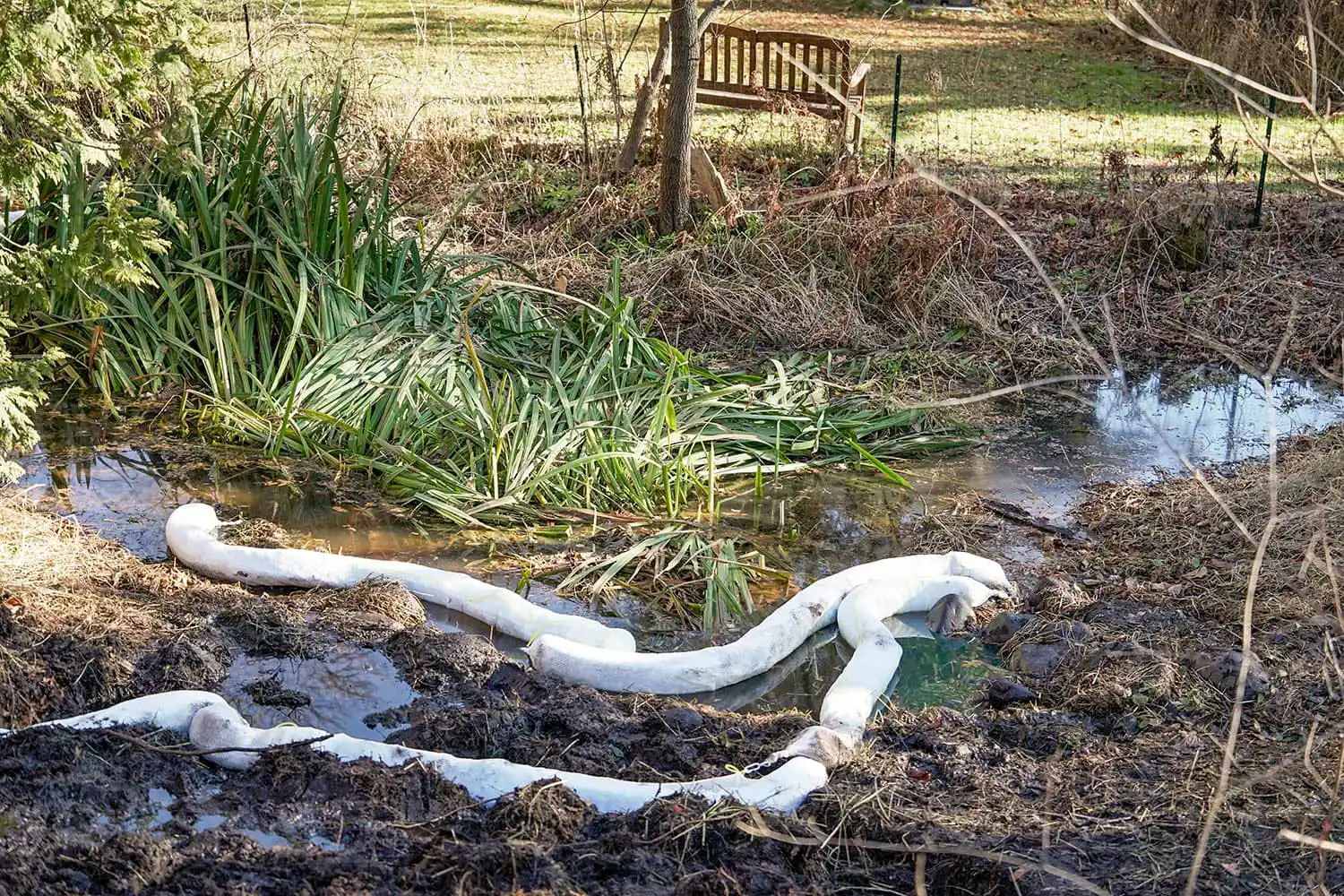
Containment is especially important in Minnesota due to the proximity of lakes, rivers, and wetlands.
Oil spill containment using absorbent booms to protect soil and waterways during on-site cleanup in Minnesota

Absorbent containment booms deployed around an on-site oil spill to control the spread of contaminants and protect nearby soil and water resources during environmental cleanup operations.

4. Notify Internal Personnel

Alert appropriate personnel immediately:
  • supervisors or site managers
  • environmental or safety teams
  • designated spill response coordinators
Document key details:
  • material type
  • estimated volume
  • location and affected areas

5. Report the Spill (If Required)

Certain spills must be reported to the State of Minnesota.

Notify Authorities: Report the incident to the State of Minnesota via the Minnesota Duty Officer at 651-649-5451 or 1-800-422-0798.

Reporting requirements depend on the type and quantity of material released and the potential for environmental impact.

6. Contact a Professional Spill Response Team

If there is any uncertainty regarding safety, containment, or regulatory requirements, professional response support should be engaged immediately.

Bay West provides emergency spill response services in Minnesota with rapid mobilization and experienced field personnel.

When Should You Call for Emergency Spill Cleanup?

Professional spill response should be considered when:
  • the material is hazardous or unknown
  • the spill cannot be safely contained on-site
  • there is risk to soil, groundwater, or surface water
  • regulatory reporting thresholds may be met
  • on-site personnel are not trained or equipped to respond

Early engagement often reduces overall cleanup scope and long-term cost.

What Happens During Professional Spill Cleanup?

Spill response typically follows a structured process:

Site Assessment

Evaluate material type, extent of impact, and potential risks.

Containment and Control

Prevent further spread using specialized containment systems.

Recovery and Cleanup

Remove impacted materials using trained personnel and appropriate equipment.

Waste Handling and Disposal

Coordinate transportation and disposal at approved facilities in accordance with regulations.

Documentation and Compliance

Support reporting and regulatory coordination with agencies such as the MPCA.

Common Spill Scenarios in Minnesota

Spill incidents occur across a range of industries and conditions:
  • fuel and diesel releases during transport
  • chemical spills at industrial facilities
  • tank overfills or equipment failures
  • construction site incidents
  • agricultural or processing facility releases
Each scenario requires a response strategy based on site conditions and environmental sensitivity.
Emergency spill response team using vacuum truck equipment to remove hazardous materials during cleanup operations

Bay West spill response personnel using vacuum equipment to remove contaminants during an active on-site cleanup operation.

Preventing Future Spills

While not all incidents can be avoided, proactive planning helps reduce risk.

Common strategies include:

  • routine equipment inspection and maintenance
  • employee spill response training
  • secondary containment systems
  • facility response planning

Why Local Spill Response Experience Matters

Spill response in Minnesota involves unique challenges:
  • seasonal conditions such as frozen ground and spring runoff
  • proximity to sensitive water resources
  • state-specific regulatory requirements

Working with a local provider helps ensure faster response times and familiarity with Minnesota agencies and environmental conditions.

Get Help Now: 24/7 Spill Response in Minnesota

When a spill occurs, timely action is critical. A fast, coordinated response can reduce environmental impact, limit liability, and support compliance.

Bay West provides 24/7 emergency spill response services across Minnesota and the Midwest.

Related Resources

Contact Us to Learn More

Ensure environmental safety and compliance. Contact Bay West today for expert emergency spill response services in Minnesota and the Midwest.​

Share

Recent Insights

We’re hiring!


Join our Bay West team today.